
Renting a car in Iceland gives you the freedom to explore at your own pace, but choosing the right vehicle and understanding the local driving conditions takes a little preparation.
Iceland’s changing weather, gravel roads and long distances make this a different kind of road trip from a quick city hire in Europe. This guide covers the essentials, from choosing between 2WD and 4×4 to understanding insurance and preparing for the roads ahead.
If you’re want to explore more places in Iceland, you’ll want a car you trust. Once the car’s sorted, you can plan what to pack for Iceland and where to stay in Iceland without second-guessing the rest.
READ ALSO:

5 Best Ice Cave Tours in Iceland [2026 GUIDE]
Best eSIM For Europe [2026 GUIDE]
Is It Worth Renting A Car In Iceland?

Eastfjords, Iceland
For most trips, yes. Renting a car is the best way to see Iceland, and for anything beyond Reykjavik and the Golden Circle, it’s almost the only way.
Iceland has no trains, and public buses outside the capital are built for locals getting from town to town, not for travellers. They won’t stop at waterfalls, black sand beaches or glacier lagoons. You can join guided day tours instead, but they add up quickly, especially if there are 2 or more of you, and you’re stuck with someone else’s timetable. With a car, you can stop whenever a view takes your breath away, which in Iceland happens roughly every 10 minutes.
I drove the full Ring Road on my own, and having my own car is what made the trip. I could leave early to beat the tour buses to Seljalandsfoss, linger at Jökulsárlón for as long as I wanted, and pull over on empty stretches of road just to sit in the silence.
Is It Easy To Drive In Iceland?
In summer, mostly yes. Iceland drives on the right, the roads are quiet, and the Ring Road and the main routes are paved and well signposted. Outside Reykjavik, traffic is light, and you can go a long time without seeing another car.
It’s a very different kind of driving from what most people are used to, though. These are the things that catch first-timers out:
- The weather changes fast. Wind, rain, fog or snow can roll in within an hour, even in summer.
- Not every road is paved. Many side roads to waterfalls and viewpoints are gravel, which needs slower, more careful driving.
- Bridges are often single-lane. You’ll find plenty of them on the Ring Road, and you need to give way to the car closest to the bridge.
- Sheep wander onto the road, especially in summer, when they graze freely across the countryside.
- Petrol stations can be far apart in the east and north, so you need to plan your fuel stops.
Winter is a different story. Between November and March, you’ll be driving on snow and ice, in strong winds and with only a few hours of daylight.
If you’re not confident driving in those conditions, it’s safer to stay in Reykjavik and book guided tours, or to stick to the South Coast and the Golden Circle, which are the best-maintained roads in winter.
7 Things To Know Before Renting A Car In Iceland
1. Pick The Right Car For Your Season And Route

Summer drive
The best car depends on when you’re travelling and where you’re heading. Choose one that suits your itinerary, rather than assuming you need the biggest vehicle available.
In summer (June to August), temperatures sit around 10°C – 21°C / 50°F – 70°F. A 2WD car handles the Golden Circle, the South Coast and the Ring Road with ease. These routes are paved, so an economy car is a practical choice for most first-time visitors.
If you’re starting from Reykjavik, it’s worth planning day trips from Reykjavik and the routes and attractions you can explore by car.
The Highlands are a different story. You’ll need a 4×4 to drive the mountain tracks known as F-roads, and 2WD cars aren’t allowed on them. Check that the road’s open and how tricky it is on the Icelandic Road and Coastal Administration website before you set off, because conditions change from one route to the next.
Winter brings snow, ice, short daylight hours and strong winds, with temperatures around -3°C to 2°C / 27°F to 36°F. A 4×4 gives you extra traction and stability, but it won’t make slippery roads safe. Winter tyres matter just as much as the drivetrain.
Pro tip: Match the car to your route, not your ego. A 2WD in summer is plenty for most first-timers, while a 4×4 is essential for F-roads.
2. Consider A Local Iceland Rental Company
Local providers handle Iceland’s driving conditions all year round. That experience can help when you need practical advice about vehicle suitability, seasonal challenges and travel restrictions.
One example is Lava Car Rental, a family-owned Icelandic company about five minutes from Keflavík International Airport. Its fleet covers economy cars, SUVs, 4x4s and campervans, so it suits different travel styles.
Direct bookings include unlimited mileage, seasonal tyres and essential insurance protection. You can also choose Full Protection for additional cover on eligible damage.
The company runs a complimentary airport shuttle during operating hours and offers self-service vehicle pick-up. That flexibility helps if your flight lands at an awkward time.
Pro tip: Ask any company three questions before you book: what’s included in the insurance, how are tolls handled, and what’s the policy on F-roads? Clear answers can tell you a lot about the support you’ll get if something goes wrong.
3. Check What’s Included In The Rental

Renting a car with a guide
If you’re used to renting a car in the USA, some of the booking basics will feel familiar, such as comparing what’s included, checking the fuel policy and understanding the insurance coverage.
However, Iceland has its own considerations, particularly when it comes to vehicle suitability and protection against road-related damage.
Check whether your booking includes insurance, additional drivers or a guide, and unlimited mileage. The Ring Road alone stretches around 1,300 kilometres (808 miles), and every waterfall detour adds to the distance you travel. A mileage cap may not suit a longer road trip.
Look at the fuel policy, seasonal tyres and pick-up arrangements too. Check whether the rental company provides an airport transfer, where you’ll collect the keys and what to do if your flight arrives outside its usual operating hours.
Cancellation terms deserve a quick read as well. Flexible or refundable bookings can be useful when your plans might shift, especially with Iceland’s weather in charge.
Pro tip: Review the booking conditions side by side. Check mileage, insurance, tyres, pick-up arrangements and cancellation terms before choosing a car.
4. Know How Tolls And Parking Work
Some Icelandic routes have electronic tolls, so it’s worth knowing where they are and how to pay before setting off. Rental companies may have their own procedures for handling tolls, so ask whether you need to pay them yourself or whether the company will manage them after your journey.
The Vaðlaheiðargöng tunnel near Akureyri provides a shortcut through the mountain rather than taking the road over Víkurskarð. You can pay the tunnel toll online up to 24 hours before or after crossing.
The Hornafjarðarfljót bridge on the Ring Road near Höfn, in Southeast Iceland, is also tolled. You can pay the bridge toll online within 24 hours of crossing.
The Víkurskarð mountain road is an alternative to the tunnel. It takes longer, and conditions can be challenging in winter, so check the road situation before choosing that route.
Parking arrangements vary between attractions. Some popular natural sites use parking machines or apps, so check the instructions when you arrive and keep your phone handy if digital payment is required.
5. Prepare For Iceland’s Weather And Road Conditions
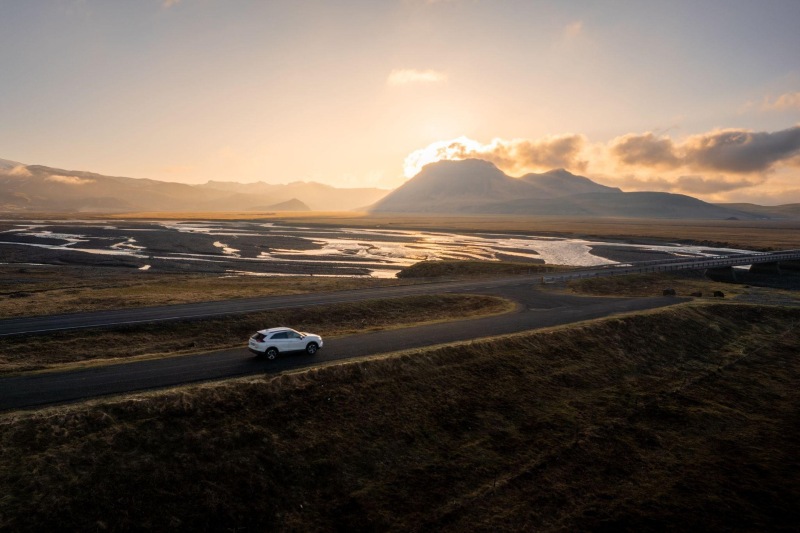
Driving through Iceland’s roads
Even with the right rental car, Iceland demands flexibility. The weather can change dramatically within a short distance. A drive that starts under clear skies can hit heavy rain, snow, fog or powerful winds by the afternoon.
Wind is the big one, especially on exposed coastal roads and open plains. Hold your car door firmly with both hands when you open it. A sudden gust can bend it past its hinges, and that kind of damage may not be covered by your rental insurance.
Gravel roads need extra care. Slow down, keep a safe distance from other vehicles and avoid sudden braking. Ease off the accelerator when passing oncoming traffic, too, to reduce the chance of loose stones hitting your windscreen.
Check the SafeTravel Iceland alerts every day, especially before long drives. If severe weather’s forecast, delaying a journey is often the safest decision.
Pro tip: Build one buffer day into your itinerary. A spare day means a storm can change your plans without forcing you to drive in unsafe conditions.
6. Learn The Local Driving Rules
Iceland’s driving rules may differ from what you’re used to. Learn them before pick-up, as the responsibility for following them rests with the driver.
Keep your headlights on at all times, day and night. Stick to the speed limits: 90 km/h (56 mph) on paved rural roads, 80 km/h (50 mph) on gravel and 50 km/h (31 mph) in towns. Speed cameras are common, so don’t rely on an empty road to keep you out of trouble.
Never drive off-road. It’s illegal, it scars fragile moss and lava fields for decades, and it can void your insurance. Single-lane bridges are common on the Ring Road, so slow down and give way to the car that’s closest to the bridge.
Photo stops tempt everyone. Pull into a proper lay-by instead of stopping on the road, since blind crests and sudden gusts can make roadside stopping dangerous.
7. Understand Rental Car Insurance Before You Book
Insurance is one of the most important things to understand before collecting your rental car. Iceland’s landscape and weather bring risks you might not encounter on a typical European road trip.
Loose gravel can chip windscreens and paintwork. Windblown volcanic sand can scratch a car’s surface, while a strong gust can catch an open door and damage it.
Here are the main protection options you’ll see:
- Collision Damage Waiver (CDW): reduces your responsibility for certain collision-related damage.
- Super Collision Damage Waiver (SCDW): typically extends the protection offered by CDW.
- Gravel Protection (GP): covers certain damage caused by loose stones and gravel.
- Theft Protection (TP): protects you against vehicle theft under specified conditions.
- Sand and Ash Protection (SAAP): covers certain damage from windblown volcanic sand and ash.
Coverage varies between rental companies, and even comprehensive policies have exclusions. Damage from river crossings, reckless driving or wind catching an open door may not be covered. Read the terms carefully so you know what is and isn’t included.
Take dated photos of the car at pick-up, too. Photograph the bodywork, windscreen, wheels and interior so there’s a clear record of its condition before you drive away.
Pro tip: Read the exclusions, not just the headline cover. Check whether gravel and sand damage are included, and ask the rental company to explain anything that isn’t clear.
Renting a car in Iceland gives you the freedom to chase waterfalls, stop at unexpected viewpoints and travel at your own pace. A smooth road trip starts before you collect the keys. Choose a vehicle that suits the season, understand your insurance, review the rental conditions and check the weather daily.
Whether you’re spending 48 hours in Reykjavik or circling the whole island, a little preparation goes a long way.

